Why a Chimney Cap Should Be Built for the Chimney It Sits On
Off-the-shelf chimney caps are built for a chimney that does not actually exist.
They are designed to fit a category — a typical width, a typical pitch, a standard dimension — not the specific chimney sitting on the specific roof. And on homes with custom masonry, unusual proportions, or architectural details that fall outside standard catalog dimensions, "close enough" tends to show up in the way the cap fits, weathers, and ages over time.
The problem is rarely how the cap looks the day it is installed.
It is how the cap performs five, ten, or twenty years later under the wind, water, and temperature cycling the structure actually faces.
That is where custom fabrication changes the result.
What Custom Chimney Cap Fabrication Looks Like
The chimney comes first. The cap is built to match.
That is the order of operations on a custom chimney cap from TT&L Sheet Metal. Measure the structure. Fabricate to those dimensions in the shop. Install the finished piece on the same house it was built for.
Three things happen in that sequence that off-the-shelf caps cannot offer.
The measurements are real.
A custom cap is measured on the chimney it is going to live on — not estimated from a category. Width, pitch, profile, surrounding architectural detail. Everything that affects fit gets captured at the source.
The fabrication is matched to the structure.
The piece is built to those dimensions, in the material the project calls for, with the reinforcement and fastening suited to the conditions the structure will face. A coastal home faces different exposure than a sheltered one. A ridge home faces different conditions than one tucked behind trees.
Custom fabrication can account for that.
Standard products cannot.
And the install does not require a hand-off. TT&L fabricates and installs the cap with the same team. The people putting the cap on the roof are the same people who measured the chimney and built the piece.
That continuity matters more than it sounds.
A custom cap fabricated in one shop and installed by a separate contractor — who never saw the chimney, never measured it, and never participated in the fabrication — loses part of what makes custom work valuable in the first place.
The Skyline Project
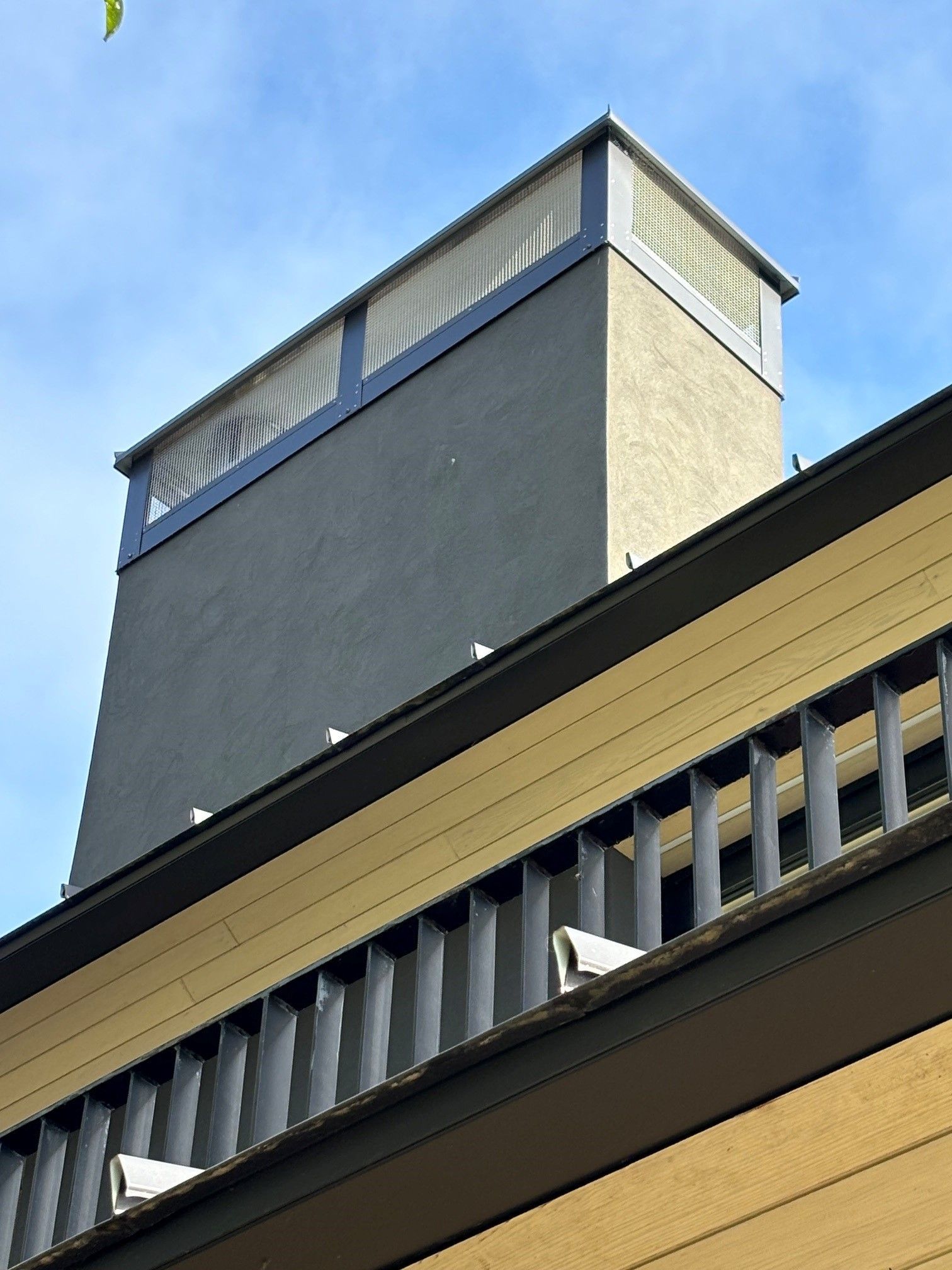
A recent project in Portland's Skyline area shows what this looks like in practice.
The homeowner was replacing a copper chimney cap that had begun tearing apart under wind exposure.
From the ground, the original cap looked finished: copper, formed, installed.
From the inside, it told a different story.
Bolt-and-nut connections had begun working loose under cyclical wind loading. The lid lacked internal reinforcement to stiffen the assembly. The design simply could not hold up to the conditions on that ridge over time.
TT&L measured the existing chimney, fabricated the replacement to spec, and handled the install.
The new cap was built for the conditions it had to survive.
Copper on top for finish and architectural character — chosen because the homeowner wanted the look, and because copper develops a patina that ages with the house rather than against it.
Stainless steel reinforcement underneath to stiffen the lid. A copper top alone, on a windy ridge, eventually flexes. Reinforcement keeps the assembly rigid where it needs to be.
Aircraft-grade stainless steel rivets to hold the assembly together. Standard screws and bolt connections tend to loosen over time under cyclical wind loading. Rivets do not.
That is why they were the right fastening system for this exposure.
A finished piece built for the actual chimney. Measured on-site. Fabricated to spec. Installed by the same team that built it.
Most of those details are not visible from the ground.
They are the reason the cap is built to last.
What Custom Fabrication Is Supposed to Deliver
Custom fabrication is not about adding cost to a project for the sake of it.
It is about building a piece that performs in the conditions it actually has to face — the structure, the exposure, the finish expectations, and the weather the assembly will live under for decades.
When custom fabrication is done well, it produces a few clear results:
• a tighter fit on the structure
• better weather protection because the geometry is right
• longer-lasting finishes because the materials were chosen intentionally
• a finished piece that looks like it belongs on the house rather than added afterward
• reinforcement, fastening, and material thickness selected for the conditions the piece will actually face
None of these are dramatic.
None of them are the details most people notice on installation day.
They are what make the cap still doing its job twenty years later.
Why TT&L Builds Chimney Caps This Way
TT&L Sheet Metal has been fabricating custom architectural sheet metal in the Pacific Northwest since 1978.
Three generations. One shop. The same standards across decades of work.
Chimney caps are one part of what runs through the shop — alongside custom flashing, sill pans, panels, gutters, and one-off architectural fabrication for contractors, builders, and homeowners across the region.
But the chimney cap work follows the same rule the rest of the shop runs on:
Build the piece for the actual condition, in the right material, with the right details, and install it like it matters.
The reason a chimney cap can do its job for decades is everything built into it before it ever reaches the roof.
One-off custom pieces or large production runs.
If it can be made from sheet metal, TT&L can build it — measured, fabricated, and installed locally, or shipped anywhere in the U.S.
EXPLORE MORE FIELD NOTES